Understanding Postpartum Anxiety: Symptoms and Support Through Mindfulness and Meditation
Navigating the complex emotions and challenges of the postpartum period can be overwhelming for many new parents. While postpartum depression often receives significant attention, Postpartum anxiety (PPA) is an equally prevalent and impactful condition that deserves recognition and understanding, especially among adults with anxiety disorders. This article will explore the symptoms of PPA and highlight how mindfulness and meditation can serve as powerful tools for support and healing during times of stress.
What is Postpartum Anxiety?
Definition and Overview
Postpartum anxiety is a mental health condition characterized by excessive worry, fear, and a persistent feeling of anxiety that arises after childbirth. It extends beyond the normal jitters of new parenthood, often manifesting as intrusive thoughts, a sense of impending doom, or an inability to relax. This pervasive feeling of anxiety can significantly disrupt daily activities and hinder a parent’s ability to bond with their baby or enjoy the postpartum experience during times of stress.
Types of Anxiety Disorders
Postpartum anxiety can encompass various anxiety disorders, all specifically triggered or exacerbated by the postpartum period. While some individuals may experience anxiety in a singular form, others might grapple with a combination of sensations in their body, leading to powerful anxiety.
Anxiety disorders, can be addressed through mindfulness classes and cognitive behavioral therapy. These can include mindfulness techniques such as deep breathing and body awareness exercises, essential for effective stress management. Engaging in deep breathing exercises can greatly enhance physical and mental health. and body scans during times of stress:
- Generalized anxiety disorder can impact health and well-being, particularly during times of stress.
- Panic disorder can be effectively managed through mindfulness-based therapies, relaxation techniques, and daily mindfulness exercises that promote physical and mental health and well-being.
- Obsessive-compulsive disorder (OCD)
- Post-traumatic stress disorder (PTSD)
Understanding the specific manifestation of these conditions is crucial for tailoring effective support and intervention strategies for individuals who experience anxiety.
Symptoms of Postpartum Anxiety
The symptoms of postpartum anxiety are diverse and can significantly impact both mental and physical health. Common manifestations include a constant feeling of unease and restlessness. Individuals may also experience various other symptoms, such as heart palpitations and difficulty sleeping, which can be alleviated with mindfulness techniques moment by moment.
- Excessive worry about the baby’s health or safety can significantly contribute to Managing anxiety levels often requires a combination of techniques that promote body awareness and relaxation, crucial for effective stress management moment by moment, making it essential to practice mindfulness exercises to enhance your physical and mental health.
- Difficulty sleeping even when the baby is asleep can exacerbate the health and well-being during times of stress. During periods of stress, the body’s natural stress response becomes more active in new parents, affecting both their body and mind.
- Heart palpitations are a common symptom of anxiety that can be addressed through mindfulness techniques.
- Shortness of breath can be a symptom of anxiety, which can be managed through mindfulness techniques that promote health and well-being.
- Muscle tension often arises from stress and anxiety, emphasizing the need for mindfulness practices to help ease anxiety and promote body awareness.
- Digestive issues can often be exacerbated by stress and anxiety, highlighting the importance of understanding anxiety.
- Intrusive or racing thoughts, often negative thought patterns, make it challenging to focus and engage with the present moment during times of stress.
The Role of Mindfulness in Managing Anxiety
How Mindfulness Helps with Anxiety
Mindfulness plays a pivotal role in managing anxiety, especially for new mothers experiencing postpartum anxiety, by fostering a connection between body and mind. By engaging in the practice of mindfulness, individuals can cultivate a heightened awareness of their thoughts and feelings without judgment, becoming more aware of the present moment and improving their physical and mental health., which is crucial when dealing with overwhelming sensations. This mindful approach allows for a gentle observation of negative thought patterns and the feeling of anxiety, rather than being consumed by them in daily activities. Through consistent mindfulness practice, one can learn to identify triggers and develop a more adaptive response, effectively helping to reduce stress and anxiety.
Benefits of Mindfulness for New Mothers
The benefits of mindfulness are particularly profound for new mothers navigating the challenges of postpartum anxiety in their daily activities. Mindfulness can help reduce anxiety by fostering a deeper connection to the present moment. Taking a few minutes to practice mindfulness meditation is often difficult to achieve amidst the demands of caring for a newborn and the pervasive feeling of anxiety that can arise from stress response. Research shows that engaging in mindfulness-based stress reduction techniques can significantly improve mental health outcomes, including a reduction in symptoms associated with anxiety and depression. This practice not only aids in stress reduction but also enhances emotional regulation, allowing mothers to better manage the physical and emotional toll of the postpartum period through mindfulness-based therapies.
Mindfulness Meditation Techniques
Several mindfulness meditation techniques can be highly effective in managing and reducing the feeling of anxiety. Daily mindfulness, even for short periods, can incorporate these techniques to help manage anxiety and promote a greater sense of calm, providing crucial support for new mothers who may need to take a few minutes for themselves. Some of these valuable techniques include mindfulness practices that can be integrated into daily activities:
- Simple yet powerful breathing exercises, Mindfulness techniques, such as mindful breathing, help to anchor attention to the present moment and calm the nervous system during times of stress and daily activities.
- The body scan is another valuable mindfulness exercise where one systematically brings awareness to different sensations throughout the body, helping to become aware of and release tension moment by moment.
Mindfulness Exercises for Anxiety Relief
Breathing Exercises
Breathing exercises are a cornerstone of mindfulness for anxiety, offering immediate relief and a tangible way to practice mindful awareness, particularly for adults with anxiety disorders. Mindful breathing involves focusing attention on the natural rhythm of your breath – the sensation of air entering and leaving your body, which can help individuals become more aware of the present moment. This simple yet profound mindfulness exercise can help reduce stress and powerful anxiety moment by moment by activating the parasympathetic nervous system, which promotes relaxation and body awareness. Regular practice of these breathing exercises helps to anchor the mind in the present moment, diverting attention from negative thought patterns and the pervasive feeling of anxiety. Engaging in mindful breathing, even for a few minutes daily, can significantly improve physical health and emotional regulation, making it a powerful tool for new mothers experiencing anxiety.
Mindfulness Exercises for Anxiety Relief
Beyond mindful breathing, various other mindfulness exercises for anxiety relief can be incredibly beneficial. The body scan meditation is an excellent practice where you systematically bring your awareness to different parts of your body, noticing any sensation without judgment, and allowing thoughts to let them go. This helps you to become aware of physical tension can be alleviated moment by moment through mindfulness practices. Through gentle focus, individuals can release tension moment by moment, thus reducing stress. Another effective mindfulness exercise is the five senses exercise, where you consciously acknowledge five things you can see, four things you can feel, three things you can hear, two things you can smell, and one thing you can taste. This grounds you firmly in the present moment, helping you stay present and pulling your mind away from anxious thoughts to ease anxiety effectively.
Practicing Mindfulness in Daily Life
Integrating mindfulness into daily routines can significantly improve physical and mental health. Practicing it in daily life extends the benefits beyond formal meditation sessions, fostering a continuous state of mindful awareness that helps to reduce anxiety and let them go. This involves bringing a mindful approach to everyday activities, such as eating, walking, or even washing dishes. By focusing fully on the sensation and experience of each task – the taste of food, the feeling of your feet on the ground, or the warmth of the water – you can practice mindfulness throughout your day. This daily mindfulness helps to cultivate a sustained sense of calm, allowing you to observe thoughts and feelings without becoming overwhelmed, thereby significantly aiding in stress reduction and the overall management of postpartum anxiety.
Using Meditation to Reduce Stress
Meditation for Anxiety: Techniques and Tips
Meditation offers a powerful pathway to reduce stress and effectively manage anxiety, particularly for those grappling with postpartum anxiety. Engaging in meditation for anxiety can help individuals develop a greater sense of calm and perspective during times of stress. Techniques often focus on anchoring attention to the present moment, such as through mindful breathing or body scan exercises, which can be integrated into daily activities. This practice allows individuals to observe thoughts and feelings without judgment, helping them stay present and fostering a sense of detachment from overwhelming negative thought patterns. Regular meditation practice can significantly reduce the feeling of anxiety and enhance overall mental well-being by promoting a more balanced state of mind and body awareness.
Creating a Meditation Routine
Establishing a consistent Incorporating a meditation routine can enhance your overall physical and mental health. Understanding anxiety is key to harnessing the full benefits of meditation for anxiety and stress reduction, particularly through randomized controlled trials during times of stress and daily activities. Even short, daily mindfulness meditation sessions can be profoundly impactful for stress management. Begin with just 10 minutes of mindfulness each day, perhaps first thing in the morning or before bed, to practice mindfulness exercises. Find a quiet space where you can sit comfortably and focus on your breath or a guided meditation. Gradually increasing the duration of your meditation practice will deepen its effects, helping to manage anxiety more effectively and reduce stress during times of stress. Consistency is more important than duration, as regular engagement builds the capacity for sustained calm.
Integrating Meditation with Mindfulness Practices
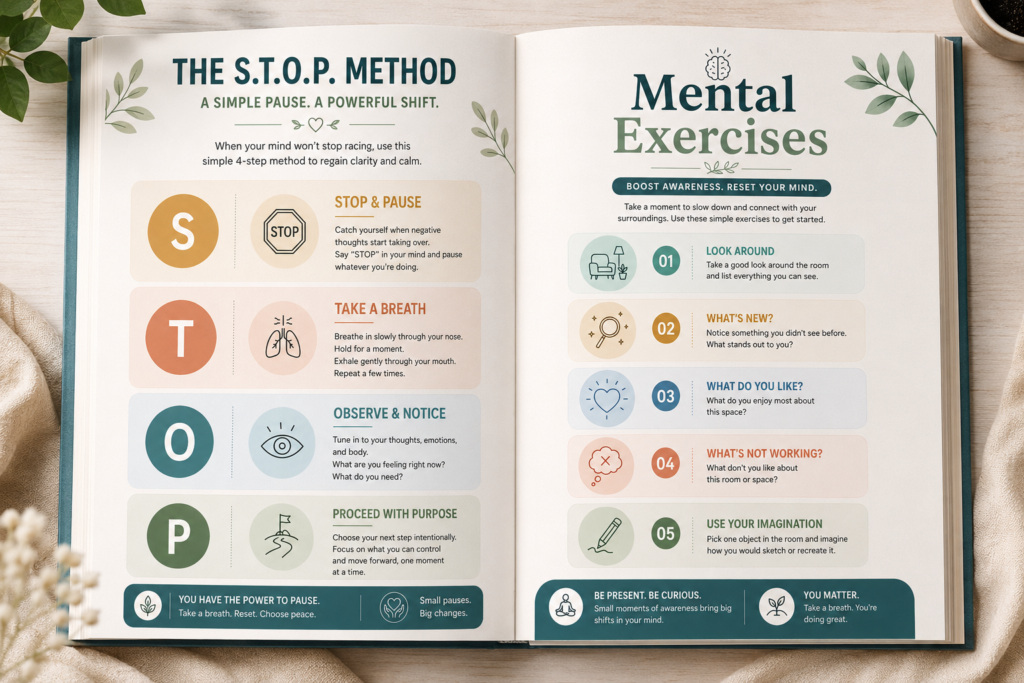
Image reference from Anxiety Journal workbook
Integrating meditation with broader mindfulness practices creates a holistic approach to managing anxiety and promoting stress reduction. While meditation is a formal practice, mindfulness can be woven into everyday activities. For instance, using mindfulness allows one to fully engage with tasks like eating or walking, bringing a sense of presence to the present moment. This daily mindfulness complements formal meditation by continuously training the mind to become aware of thoughts and feelings without getting carried away. The combination of sustained meditation and mindful living helps to reduce anxiety, cultivate inner peace, and enhance emotional regulation, benefiting both the mind and body.
Finding Support and Resources
Community and Professional Support
Finding robust community and professional support is a vital component in managing postpartum anxiety and sustaining mindfulness practice. Connecting with others who share similar experiences can validate feelings and provide a sense of belonging, which helps to reduce anxiety. Support groups, whether in-person or online, offer a safe space to discuss challenges, share strategies for stress reduction, and practice mindfulness meditation together. Additionally, seeking professional help from therapists or counselors specializing in perinatal mental health can provide tailored strategies and coping mechanisms for health and well-being. These professionals can guide individuals in using mindfulness, meditation for anxiety, and other therapeutic techniques to manage anxiety and improve overall health and well-being.
Mindfulness for Anxiety: Online Resources
The digital age offers a wealth of online resources that can significantly support mindfulness for anxiety, making it accessible to a broader audience during times of stress. Numerous apps, websites, and virtual platforms provide guided mindfulness meditation, breathing exercises, and educational content on stress management and physical and mental health. These resources can be particularly beneficial for new mothers who may have limited time or mobility, helping them stay present in their daily lives. Many platforms offer specific programs for managing anxiety and depression, incorporating stress management and mindfulness-based stress reduction techniques. Engaging with these online tools allows individuals to practice mindfulness at their own pace, integrate daily mindfulness into their routine, and continue their journey toward reducing stress and anxiety from the comfort of their home.
How a Mindfulness Journal Can Help Postpartum Mothers
The postpartum period can bring immense love, but also exhaustion, emotional ups and downs, constant worry, and feelings of overwhelm. A Mindfulness Journal can give new mothers a gentle space to pause, breathe, and reconnect with themselves. Through simple daily prompts, gratitude practices, breathing exercises, emotional check-ins, and self-compassion activities, mothers can learn to notice anxious thoughts without becoming overwhelmed by them.
Writing down worries can help clear mental clutter, while focusing on small moments of gratitude and what is within their control can create a greater sense of calm. Most importantly, the journal reminds a mother that her wellbeing matters too—she doesn’t have to be perfect, and she deserves moments of rest, self-care, and kindness while caring for her baby.
Workshops and Groups for Mindfulness Practice
Participating in workshops and groups dedicated to mindfulness practice can provide invaluable in-depth learning and a supportive environment for individuals managing anxiety. These structured settings often offer techniques to improve health and well-being during times of stress. mindfulness training led by experienced instructors, guiding participants through various mindfulness exercises for anxiety relief, such as body scan meditations and mindful breathing, which enhance physical and mental health. The group dynamic fosters a sense of community, allowing participants to share insights and experiences, which can reinforce the benefits of mindfulness. Such workshops not only deepen one’s understanding of how mindfulness can help to reduce stress but also provide practical tools and techniques that can be applied to daily life to manage anxiety more effectively.
Sindhya Binesh

Sindhya Binesh
Sindhya Binesh is a Certified Mindfulness Trainer and Life Coach dedicated to helping children, teens, women, and families build happier, healthier, and more resilient lives. Through a unique blend of Mindfulness, Mindset, and Performance training, she empowers individuals to develop emotional resilience, confidence, focus, and inner calm.
- Sindhya Binesh

- Sindhya Binesh

- Sindhya Binesh

- Sindhya Binesh