5 Fun and Engaging Mindfulness Activities for Kids
Cultivating tranquility and focus in the lives of young ones is more important than ever in our bustling modern world. Mindfulness, the practice of paying attention to the present moment without judgment, offers a powerful toolkit for children to navigate their emotions, reduce stress, and enhance their overall well-being. Introducing mindfulness to children doesn’t require lengthy meditations or complex philosophies; instead, it can be woven into everyday life through playful and engaging activities. These experiences can help children develop a deeper understanding of themselves and the world around them, fostering resilience and a sense of calm that will benefit them throughout their lives. The following exploration will delve into a variety of interactive methods designed to make mindfulness an enjoyable and accessible journey for children of all ages.
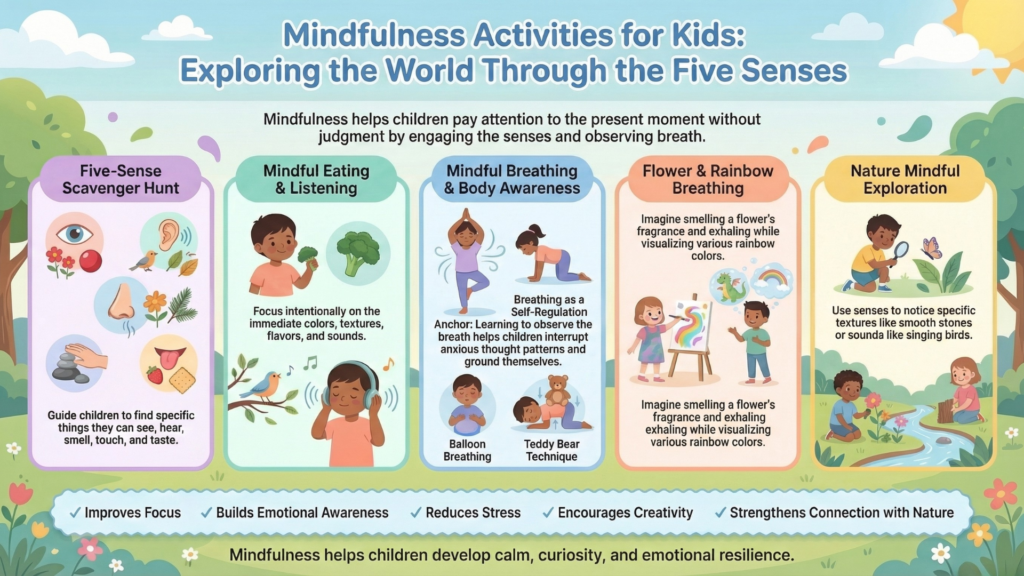
Breathing is a fundamental, often unconscious, bodily function that holds immense power when brought to conscious awareness. For children, learning to control and observe their breath can be a gateway to self-regulation, a crucial skill for managing big emotions and navigating challenging situations. Mindful breathing exercises are designed to be simple, intuitive, and adaptable, making them perfect for young minds. The core principle is to guide children to notice the sensation of their breath entering and leaving their bodies, transforming a routine biological process into an anchor for the present moment. This intentional focus interrupts anxious thought patterns and promotes a sense of calm, grounding them when they feel overwhelmed.
Bringing Breath to Life: Engaging Techniques for Youngners
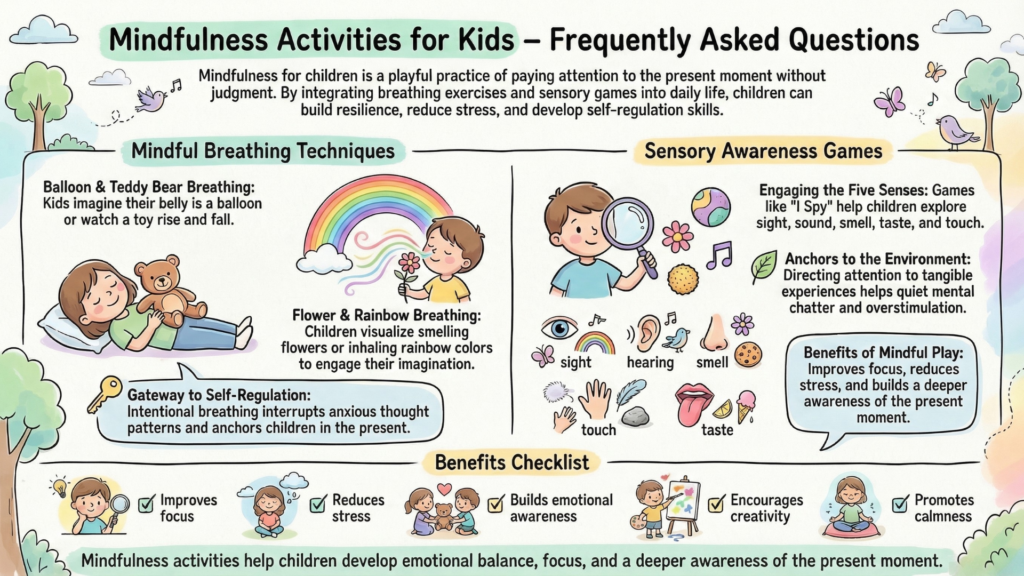
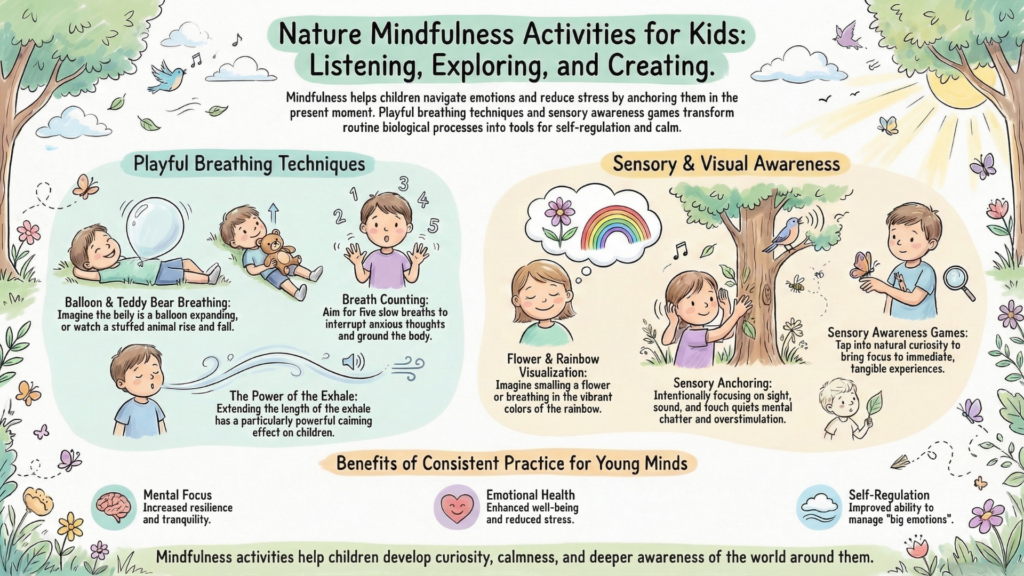
There are numerous creative ways to make mindful breathing fun and accessible for children. One popular method is “Balloon Breathing,” where children imagine their belly as a balloon. As they inhale, they visualize the balloon expanding, and as they exhale, they imagine it slowly deflating. This visual metaphor helps them connect with the physical sensations of their diaphragm and abdominal muscles. Another engaging technique is “Teddy Bear Breathing.” Children lie down and place a small stuffed animal on their belly. As they breathe, they watch the teddy bear rise with each inhale and fall with each exhale. This adds a playful element while still encouraging awareness of abdominal expansion. For slightly older children, a simple extension is to count their breaths. They can aim to take five slow breaths, counting each inhale and exhale, or try to extend the length of their exhale, which has a particularly calming effect. The key is to keep it light and pressure-free, allowing children to discover the benefits of their breath at their own pace. Regular practice, even just for a few minutes each day, can significantly enhance a child’s ability to calm themselves down and focus.
Beyond the Belly: Exploring Different Breath Awareness
While abdominal breathing is often the starting point, there are other aspects of breath awareness that can be explored with children. “Flower Breathing” involves bringing a pretend flower to their nose and inhaling deeply to smell its fragrance, then exhaling slowly as if blowing out a candle. This engages the senses and encourages a fuller inhale. Similarly, “Rainbow Breathing” uses visualization. Children can imagine breathing in a specific color of the rainbow with each inhale and breathing out a different color with each exhale, creating their own mental masterpiece. The focus remains on the sensation of air moving in and out, but the added layer of imagination makes it more dynamic. It’s important to remember that the goal is not perfection, but gentle exploration and building a positive association with their breath.
Our senses are our primary connection to the world around us. By intentionally directing a child’s attention to what they can see, hear, smell, taste, and touch, we help them anchor themselves in the present moment and develop a richer appreciation for their environment. Sensory awareness games are particularly effective for children because they tap into their natural curiosity and playfulness. These activities help to quiet the mental chatter and bring their focus to the immediate, tangible experiences. This can be incredibly beneficial for children who struggle with overstimulation or tend to get lost in their thoughts.
The Five-Sense Scavenger Hunt: A World of Discovery
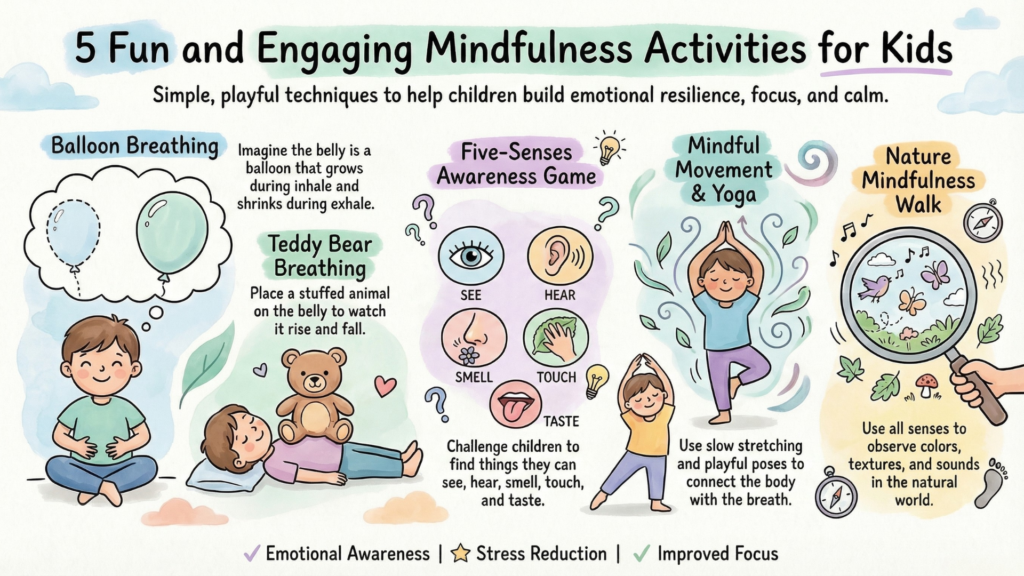
A wonderful way to introduce sensory awareness is through a “Five-Sense Scavenger Hunt.” This can be done indoors or outdoors, adapting to the child’s surroundings. For sight, you might ask them to find three things that are red, or five different shapes. For hearing, the challenge could be to identify three distinct sounds they can hear right now, perhaps a bird singing, a car passing, or the hum of a refrigerator. Taste can be explored by offering a small, healthy snack and asking them to describe its flavor, texture, and how it feels in their mouth (sweet, sour, crunchy, smooth). Smell can involve identifying different scents in the environment, whether it’s the fragrance of flowers, the aroma of baking, or even the distinct smell of rain. For touch, you can provide a variety of objects with different textures – smooth stones, rough bark, soft fabric, or cool water – and have them describe how each one feels. The emphasis is on descriptive language and mindful observation, encouraging children to truly experience each sensation.
Mindful Bites and Sounds: Expanding Sensory Exploration
Beyond a structured hunt, sensory awareness can be integrated into everyday moments. “Mindful Eating” involves asking children to pay close attention to their food. Before taking a bite, they can observe the colors and shapes on their plate. As they chew, they can notice the textures, flavors, and how the food feels in their mouth. This not only enhances appreciation for their meal but can also improve digestion and mindful consumption. Similarly, “Mindful Listening” goes beyond just identifying sounds. You can ask children to close their eyes for a minute and simply listen to all the sounds around them, from the loudest to the quietest. This exercise cultivates patience and an ability to discern subtle auditory cues, fostering a more focused and aware listening experience.
Movement is a natural and essential part of childhood, and when infused with mindfulness, it becomes a powerful tool for physical and emotional well-being. Mindful movement and yoga for children are not about achieving perfect poses but about exploring the body’s sensations and connecting breath with movement. These activities help children develop body awareness, improve coordination, and build strength and flexibility, all while cultivating a sense of inner calm and self-acceptance.
Gentle Poses, Big Benefits: Introducing Children to Yoga
Introducing yoga to children can be done through playful and imaginative sequences. Instead of formal names, you can use animal poses that are intuitive and engaging for young children. “Cat-Cow” becomes “Meowing Cat” and “Mooing Cow,” encouraging spinal flexibility and rhythmic breathing. “Downward-Facing Dog” can be a “Waggy Tail Dog,” where children feel the stretch in their hamstrings and shoulders. “Tree Pose” encourages balance and focus, often described as standing like a strong, tall tree. The emphasis is on how each pose feels in their body, not on achieving a perfect aesthetic. It’s about exploring sensations like stretching, strengthening, and balancing in a fun and non-judgmental environment.
The Rhythmic Dance of Breath and Body: Exploring Mindful Movement
Beyond specific yoga poses, any form of deliberate, mindful movement can be beneficial. This can include simple activities like “walking meditation” where children are encouraged to notice the sensation of their feet on the ground, the movement of their arms, and the rhythm of their breath as they walk. “Stretching like a Cat” involves slow, deliberate stretches, focusing on the feeling of lengthening muscles. Even simple activities like jumping jacks or running can be made more mindful by encouraging children to pay attention to their breath and the sensations in their bodies as they move. The goal is to foster a mindful connection between their physical actions and their inner state, promoting a sense of embodied presence.
Creativity and mindfulness are beautifully intertwined, as both involve tapping into imagination and present-moment awareness. Creative mindfulness activities provide children with outlets for self-expression, allowing them to process emotions, explore ideas, and develop their unique perspectives in a safe and engaging way. These activities often encourage experimentation and a focus on the process rather than a perfect outcome, which aligns perfectly with the non-judgmental nature of mindfulness.
The Art of Being Present: Painting, Drawing, and More
Engaging in art can be a deeply mindful experience for children. Instead of directing them to create a specific image, you can encourage “Mindful Doodling” where they simply let their pen or crayon move across the paper, observing the lines and shapes they create without a predetermined plan. “Sensory Painting” involves using different textures and materials, such as finger paints, sponges, or even natural items like leaves and twigs, and encouraging children to feel the textures as they paint. This blends sensory awareness with creative expression. Storytelling is another powerful avenue. “Mindful Story Creation” can involve giving children a few random objects and asking them to weave a story around them, focusing on the characters, plot, and emotions as they emerge, prompting them to stay present with their unfolding narrative.
Expressing Emotions Through Movement and Music
Beyond visual arts, creative expression can also be explored through body and sound. “Emotional Charades” involves children acting out different emotions without speaking, encouraging them to embody and understand various feelings. They can then discuss what it felt like to express those emotions. “Mindful Music Making” can involve improvising with simple instruments, focusing on the sounds they create and how they feel when they play. Even humming or singing a simple tune with awareness of the vibrations and breath involved can be a mindful practice. The emphasis throughout these activities is on the journey of creation and the internal experience, rather than the final product.
The natural world offers an unparalleled environment for cultivating mindfulness in children. The inherent sensory richness, the rhythms of nature, and the sense of wonder that the outdoors inspires provide a fertile ground for present-moment awareness. Nature-based mindfulness activities connect children with the environment around them, fostering a sense of peace, respect, and interconnectedness. They encourage a slower pace and a deeper appreciation for the intricate details often missed in our fast-paced lives.
Exploring the Whispers of the Wild: A Nature Walk Meditation
A simple nature walk can be transformed into a powerful mindfulness practice. Encourage children to walk slowly and pay attention to what they see, hear, smell, and touch. You can provide prompts such as “What colors do you notice on the trees?” or “Can you hear any birdsong?” The goal is to engage all their senses and observe the subtle changes and details within the natural environment, fostering a sense of awe and curiosity. A “Listening Walk” specifically focuses on the auditory experience, asking children to close their eyes for short periods and identify as many different sounds as possible, from the rustling of leaves to the buzz of an insect.
Becoming One with the Earth: Grounding and Appreciation
Engaging with the elements can be profoundly grounding. “Tree Hugging” encourages children to connect with the strength and stability of a tree, feeling its texture and imagining its roots spreading deep into the earth. “Cloud Gazing” involves lying down and observing the ever-changing shapes of the clouds, sparking imagination and a sense of expansive perspective. Collecting natural objects like fallen leaves, smooth stones, or interesting twigs can also be a mindful activity. The focus is on the tactile sensations, the visual details, and the gentle act of observing and appreciating the gifts of nature, fostering a sense of belonging and connection to the wider world.
The ability to listen deeply, both to the external world and to our inner landscape, is a cornerstone of mindfulness. For children, developing mindful listening skills can significantly improve their focus, comprehension, and their ability to connect with others. These activities help to train their attention, allowing them to tune into subtle nuances and discern information more effectively, while also promoting a sense of calm and centeredness.
Tuning In: Games for Active and Aware Listening
Many engaging games can be adapted to cultivate mindful listening. One such activity is “Sound Match,” where you create pairs of identical sounds in separate containers (e.g., two containers with rice, two with coins). Children shake each container and then try to match the sounds, encouraging them to listen for subtle differences in pitch and timbre. “Follow the Sound” involves one person making a sound, and others have to move quietly in the direction of the sound until they find the source. This hones their ability to pinpoint auditory cues. Another effective exercise is “Whisper Down the Lane,” but with a twist: instead of repeating words, children have to recall and describe the sound of the last person’s message, emphasizing auditory memory and attention to detail.
Embracing Silence and Subtle Sounds
Mindful listening also involves appreciating stillness and the quieter sounds that often go unnoticed. “Silence Detective” involves setting a timer for a short period of complete silence. Children are then asked to describe all the tiny sounds they heard during that time, from a distant siren to the beat of their own heart. This exercise highlights the fact that even in apparent silence, there is always sound. You can also introduce “Sound Journeys,” where children are guided to listen for specific types of sounds – for example, “Listen for all the sounds of living things” or “Listen for all the manufactured sounds.” This structured approach helps them to actively and intentionally engage with their auditory environment, building their capacity for sustained attention and deeper awareness.
Crafts and art projects provide a tactile and creative avenue for children to explore mindfulness. These activities allow them to engage their hands and minds in a focused way, fostering a sense of calm and accomplishment. The process of creating, rather than just the final product, is where the mindfulness lies, encouraging patience, focus, and an appreciation for the journey of making.
The Gentle Art of Creation: Fostering Focus and Flow
Many simple craft projects can be adapted for mindfulness practice. “Gratitude Rocks” involves finding smooth stones and decorating them with symbols or words representing things the child is grateful for. The act of selecting, painting, and reflecting on gratitude can be a deeply calming and centering experience. “Mandala Coloring” is another excellent choice. Mandalas, with their intricate patterns, require focused attention and can lead to a state of flow, where the child becomes completely absorbed in the coloring process, leading to a calming effect. Similarly, “Clay Sculpting” can be a wonderful way for children to freely express themselves and explore textures and forms with their hands, promoting a sense of tactile awareness and creative freedom.
From Materials to Mindfulness: Tactile and Visually Engaging Projects
The materials themselves can be a source of mindful engagement. “Nature Collage” involves collecting natural items like leaves, petals, and small twigs, and arranging them into a beautiful mosaic. This combines a connection with nature with a creative art project. “Finger Painting with Purpose” can involve encouraging children to use their fingers to create calming patterns or textures, focusing on the sensation of the paint on their skin and the movements of their hands. Even simple activities like “Beading Bracelets” for mindful awareness, focusing on the act of threading each bead and the colors and patterns as they emerge, can be a form of moving meditation. The emphasis in all these creative endeavors is on the process – the focused attention, the gentle movements, and the unfolding creation – rather than a predetermined outcome, nurturing a sense of calm and presence in the child.
FAQs
1. What are some examples of sensory awareness games for kids to practice mindfulness?
Some examples of sensory awareness games for kids to practice mindfulness include “I Spy” games using different senses, mindful tasting activities with different foods, and sensory scavenger hunts where kids search for items based on touch, smell, and sound.
2. How can kids engage in mindful movement and yoga activities?
Kids can engage in mindful movement and yoga activities through simple yoga poses, guided meditation, and movement exercises that focus on breathing and body awareness. These activities help kids develop strength, flexibility, and a sense of calm.
3. What are some nature-based mindfulness activities that kids can participate in?
Nature-based mindfulness activities for kids include nature walks with a focus on observing and appreciating the natural environment, nature-inspired art projects using materials found outdoors, and outdoor meditation sessions surrounded by nature.
4. How can kids practice mindful listening and sound activities?
Kids can practice mindful listening and sound activities by engaging in activities such as sound scavenger hunts, listening to calming music or nature sounds, and practicing deep listening exercises where they focus on different sounds in their environment.
5. What are some examples of mindfulness crafts and art projects for kids?
Examples of mindfulness crafts and art projects for kids include creating gratitude journals, making mindful breathing sticks with colorful ribbons, and creating mandalas or other calming art using various materials such as paint, clay, or natural elements.